Showing posts with label Assam. Show all posts

Sunday, 17 June 2012

Silver Sofi™, Crabbie's Sauces, Ginger Lager & Rising Prices

I'll start this week by congratulating those ginger products which are the National Association for the Speciality Food Trade's 2012 sofi™ Silver Finalists. This year's runners-up, to be honoured tomorrow in Washington D.C, are Japanese Ginger Chocolate Bar from Romanicos Chocolate, Ginger Peach Black Tea from The Republic of Tea, Ginger Soother from The Ginger People and The Latest Scoop Ginger Pear Sorbet from Cable Car Delights. You can see the other silver finalists here. Hopefully I will have a list of gold award winners next week.

Crabbie's was in the news again last week. This time, according to The Drum, it has launched two ginger flavoured sauces, Ginger Spiced Sweet Chilli Sauce and Sweet Ginger Splash, in the Asda supermarket chain. The sauces have been created in partnership with the increasingly popular sauce company, Trees Can't Dance.

Halewood International, producer of the Crabbie's range, plans to double in size, says the Liverpool Daily Post. It will be interesting to see how Crabbie's con>tributes to this growth.
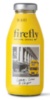
The Retail Times reported that Firefly Natural Drinks has teamed up with Selfridges to launch a limited edition lemon, lime & ginger drink in a collectable yellow bottle. The drink will be available in all Selfridges stores to celebrate the Queen's Diamond Jubilee and the Olympics.

Lance Seeto is an Australian chef who works at the Castaway Island restaurant in Fiji and who also writes a weekly column for The Fiji Times. His column last week described how he was struggling to shake off cold symptoms brought on by the start of winter. Naturally, he was advocating the use of ginger as one of the remedies to strengthen the immune system. I've never really thought about winter in Fiji. According to Wikipedia, the average winter temperature in Fiji is a chilly 22C (72F). Where I live in the UK the average summer temperature seems to be a positively balmy 22C. It's all relative, I suppose.

According to The Daily Telegraph, Ted Baker, the British-owned international fashion chain, celebrated the Queen's Diamond Jubilee week by giving out free ginger beer in its shops.

The Americans love their malt & hop beers with added ginger. The Utica Observer-Dispatch reports that the local FX Matt Brewing Company has launched a limited-edition Saranac Lemon Ginger in the style of a Belgian Saison. A Saison is a pale ale brewed for harvesting farm workers in Wallonia, and, by definition, is also for a limited period.

Still in the US and the Minneapolis St.Paul Business Journal introduced us to a new brewery and taproom called 612Brew. The brewery will launch with two regular beers and a summer seasonal beer (the one of interest to me) by the name of "Mary Ann". Mary Ann, named after a character from the 1960s TV series Gilligan's Island, is a German-style lager with added freshly grated ginger. Ginger is also a character from Gilligan's Island.

I'm always pleased when a restaurant uses ginger prominently in its signature dish. These dishes help to spread the word about ginger far beyond places where it is grown. The latest signature dish which I have discovered (on the Internet, that is, not in person) is Chocolate & Ginger Venison, from the Hildebrand Ristorante in Cape Town. A number of South African websites describe it as a fusion of Italian flavours and African flair.

Unfortunately, there was a ginger product recall last week. The Canadian Food Inspection Agency reported that Scholtens Inc has recalled Granny Appleton Crystallized Ginger in 125g packs owing to the presence of sulphites. The recall applies to packs sold in Ontario. I'm not sure whether sulphites are supposed to be in this product or that the level is too high.

In recent years, manufacturers have become more aware of the problems which sulphite ingestion can cause, particularly for those with respiratory disorders. Four years ago Queensland's Buderim Ginger started a two-year project to determine whether chlorine dioxide could replace sulphites as the preservative of choice. I've never read about the project's outcome but here is an interesting, and recent, report from the Queensland government on the same topic.

A smile must be returning to the face of many a ginger farmer in southern India. And the reason why? The price of ginger has actually started to rise. With most Indian ginger harvested during May and imported ginger not set to arrive yet, there is now a shortage in markets countrywide. This shortage has naturally translated into a rise in price. One farmer was so surprised by the increase that he decided to sell his crop which had been set aside for next season's seed. But some Indian farmers have missed out on the near three-fold increase in recent weeks. Farmers from Kerala leased land in the neighbouring state of Karnataka. As the leases expired by the end of May, these farmers had to harvest and sell their crops before the price started to rise. It is feared that the price will fall in the near future as cheaper imports from China reach the markets. (Sources: The Hindu, mathrubhumi, Deccan Herald)

Still in India and a story in The Telegraph about a ginger farmer in the state of Assam. An important source of income for him is the export of his ginger to Bangladesh. The best financial return is gained by exporting dry ginger as the drying process retains the quality and increases the shelf life. Unfortunately for him, there are no drying facilities in the region which means that he can only export ginger flakes. These flakes, which I imagine are painstakingly air-dried, have a more limited use and, consequently, a lower value.

Queensland's Sunshine Coast Daily has reported on a leaking dam and the potentially damaging consequences for ginger farmers who rely on the water supply. It hasn't been a problem so far as recent rain has replaced the leaking water but this can't continue once the weather changes.

Sunday, 20 May 2012

Jack Benny, Bunting, Spices Parks & Ginger Witbier

The Los Angeles Daily News reported on an unusual anniversary two weeks ago. It was on May 2nd, 1932 that Jack Benny took to the airwaves with his first radio programme. In those days, and for quite a while afterwards, radio programmes were sponsored and actually took the name of the sponsor. In Jack Benny's case, his show was called "The Canada Dry Ginger Ale Program". It was broadcast twice a week for five months until Canada Dry stopped the show for what The Digital Deli referred to as Benny's 'persistent needling of his sponsor'. You may think that this was a case of don't bite the hand that feeds you. But, as we now know, Jack Benny went on to bigger and better things.

Here in the UK, the Queen's Diamond Jubilee is nearly upon us. If you want to participate and you're finding it difficult to purchase your bunting, you are in luck. Crabbie's Alcoholic Ginger Beer has very kindly created some downloadable bunting in PDF format. As George and Camilla might say, what a tickety boo idea.

Two neighbouring states in the north east of India could see the creation of spices parks, according to The Economic Times. The Indian government's Union Ministry of Commerce and Industry is keen to develop these parks in Meghalaya and Assam as centres where farmers can deliver their crops, such as ginger and turmeric, and have them graded, processed and packeged for export. It is hoped that by cutting out the middleman, farmers will receive a better price.

Later this month the New York Historical Society will open a fascinating exhibition called Beer Here: Brewing New York's History which will run until early September. A stalwart of the New York brewing scene, according to the society's website, is the Matt Brewing Company which has been around for 150 years. During the prohibition era, the company produced a range of soft drinks, including the popular Utica Club Ginger Ale, in order to stay in existence. What took my eye was a reference to another soft drink, a non-alcoholic malt tonic, which contained the following advice on the bottle label, “Caution: Do not ferment, do not add yeast, or you will create beer”.

If you live in Hawaii you may be interested in a very important project being undertaken by the Kohala Watershed Partnership (KWP). The role of the KWP is to maintain the 50,000 acres of Kohala tropical rain forest. Unfortunately the forest has been infested with one of the world's most invasive weeds, Kahili Ginger. This plant is native to the Himalayan region of India but has now taken root in countries as far apart as Jamaica and Australia. Its spread has been inadvertently caused by its popularity as an ornamental garden plant. The project aims to raise enough money to fund a specialist team of 'ginger ninjas' who will concentrate on the total eradication of this plant before it is too late. I'm sure the authorities in Queensland, where the plant has been officially designated as a weed and therefore a risk to biosecurity, will be interested in the progress of this project.

I've been reading about ginger produced in the Philippines and its export to Japan, Germany, Hong Kong and the UK. I only ever see Chinese ginger in the produce section of my local supermarkets so I have no idea when I have consumed Filipino ginger. Local farmers grow a mixture of lower yielding but more disease resistant native varieties and higher yielding but less disesase resistant foreign varieties such as Hawaiian and Jamaican. Apparently, if you slice open a piece of ginger and its colour is yellowish-brown with pinkish lines, you have a Hawaiian variety. And if you encounter a small, red and very pungent rhizome, it's a Red Native.

NTD Television carried the news from Chinese state-owned media reports that farmers in Qingzhou City, Shandong Province, have been preserving their ginger and cabbage in a cocktail of harmful chemicals. Farmers have been harvesting these crops, applying pesticides and an insecticide called dichlorvos (sold under trade names such as DDVP and Vapona), and also applying a poisonous chemical known as 'six-six powder' or 'sixty-six powder'. The crops are then stored until the price rises. According to the state-owned media reports, farmers have been using 20 bottles of DDVP and 150kg of 'six-six powder' for every 25,000kg of ginger.

The Deccan Herald has reported again on the continuing plight of ginger farmers in the Malnad region of the Indian state of Karnataka. The farmers switched to ginger last year following the failure of their non-ginger crops. But even though they have avoided disease this season, they haven't been able to do anything about the fall in the price of ginger. They will be lucky to recoup their investment.

A former athlete celebrated his 80th birthday whilst descending from a solo 17,000ft climb in the Annapurna mountain range in Nepal. According to the Croydon Guardian, he celebrated at the top with a ginger tea.

North Carolina's Highland Brewing Company launched a ginger Belgian-style witbier this month which will be available until August. No sooner had it been released than Esquire magazine named it as one of the Best Beers of 2012, according to Mountain Xpress. This must really be worth trying.

Sunday, 15 April 2012

The Hairy Bikers, No Ginger Beer, Assam Ginger & American Kombucha

I've been watching The Hairy Bikers' Bakeation series on BBC2 each Tuesday. If you are not familiar with this wonderful programme, Simon King and Dave Myers are spending four months riding 5000 miles on their motorbikes across Europe introducing us to the best of traditional baking, both savoury and sweet. I knew that I was going to enjoy last week's episode in particular as the bikers were scheduled to stop off in Austria, my favourite country and one I love to visit. I wasn't disappointed. One place they stopped was the village of Seckau in the state of Styria. Here, they introduced us to Cafe Konditorei Regner, a family bakery since 1660, and their speciality gingerbread (or 'lebkuchen'). The gingerbread recipe was developed by the current owner and it was demonstrated on the programme by his son, Gregor, who, incidentally, won a gold medal at the International Baking Competition in Calgary, Canada, in 2009. You can see the Gregor Regner part of the programme on YouTube.

There was a most unusual story in Bermuda's The Royal Gazette last week. One of the country's leading soft drinks manufacturers, John Barritt & Son, famous for its Bermuda Stone Ginger Beer, actually ran out of the ginger beer for the best part of a month according to other sources. How did this happen? Barritt's ginger beer is made in Florida from a Jamaican and African ginger concentrate produced in Milton Keynes in the UK. The concentrate is shipped to the US as one of many goods in a container. A recent shipment was delayed by US Customs when a container was impounded whilst other goods were investigated by officials. Up until the end of 2010 the ginger beer was bottled in Bermuda which I assume means that the concentrate was shipped direct.

Green Bee Soda is beverage company from Maine, USA, with a unique selling proposition of making a range of sodas based on wildflower honey. The company made an announcement last week about the launch of a new flavour called Ginger Buzz. This drink contains freshly chopped ginger, coriander and the essential wildflower honey. Let me know what it's like if you are able to try it.

Organic farming is set to be the future according to the Assam state government in India. The Indian Express reported that the state goverment will allocate funding to encourage young people to take up farming and discourage existing farmers from using using chemicals. The range of eligible crops includes ginger and turmeric. The article also stated that Assam is one of India's major producers of ginger. I have read elsewhere that the state produces more than 70 percent of the country's ginger, some of it already organic. Interestingly, nearly 25 percent of Assam's farmland is already organic by virtue of the fact that there has been a shortage of chemical fertilisers.

Karbi Anglong is the largest of the 27 administrative districts in Assam. Four years ago, district officials applied to have Geographical Indication status for locally grown ginger. I don't know whether the status was ever granted but if it was then it confers an element of protection and exclusivity to what many people describe as a distinctive ginger. GIN-FED, the Ginger Growers Co-Operative Marketing Federation in Karbi Anglong, describes the local produce as the world's finest organic ginger. Traditionally, many of the ginger farmers in the district are women.

The Singhasan Hills in Karbi Anglong are said to produce the finest ginger in all India. But this area was the scene nearly ten years ago of an outbreak of violence between the Kuki and Karbi tribal communities over the Kuki production of ginger in the hills.

Last month I reported the story from The Gympie Times regarding the imminent sale of a family dairy farm and the switch to ginger farming. Well, according to The Gympie Times last week, the sell-off was completed successfully. But the latest story mentioned a detail of which I wasn't aware previously. The family already grow ginger on 10 acres of land and produce certified ginger 'seed' for Buderim Ginger.

So, whilst an Australian farmer is hoping to make a living from ginger seed, producers of ginger seed in one particular district of the Indian state of Karnataka are witnessing a dramatic fall in price. The Deccan Herald has reported that with fewer farmers wishing to grow ginger, the price of seed has plummeted from Rs 1,700 per bag to Rs 280. In fact, seed farmers may not even cover the cost of fertilisers and pesticides. It appears that it will be cheaper for the farmers to leave the ginger in the ground.

My understanding of the Indian ginger industry is that ginger is grown in areas which are isolated from and independent of each other. For example, the plight of a small part of the local ginger industry in Karnataka may be completely different to the state of the local ginger industry in Assam or Kerala. Difficulties in one area are not necessarily reflected elsewhere. There are too many factors involved such as variety, terroir, climate and export potential to name but a few.

The Maine Sunday Telegram carried a story about a relatively new start-up business in Portland, Maine. Urban Farm Fermentory (UFF) has introduced a range of alcoholic beverages called Urban Farm Fermentory Kombucha Culture which includes a ginger flavour. Kombucha is made from fermented green and black tea, and sugar. Interestingly, UFF is hoping to use local farmers to grow ginger in hothouses. These new drinks contain less than one percent alcohol.