Showing posts with label Karnataka. Show all posts

Monday, 12 November 2012

Ginger Rodent, Maine Farming, Price Rise & Success In Trinidad

Last week, Danny Alexander MP celebrated the launch of Ginger Rodent beer from the Cairngorm Brewery. For those of you who follow British current affairs, that event will probably raise a smile. But for those who don't, let me explain. Danny Alexander is the Chief Secretary to the Treasury, a British government cabinet post, and number two to the Chancellor of the Exchequer. He also has red hair and represents a constituency in the Scottish Highlands. Last year, Harriet Harman, Deputy Leader of the Labour Party, said of Alexander in a conference speech, "Now, many of us in the Labour Party are conservationists and we all love the red squirrel. But there is one ginger rodent which we never want to see again in the Highlands – Danny Alexander."

Commercial ginger growing seems to be moving further north in the US. A recent article in the Portland Phoenix featured the Good Shepherd's Farm in Bremen, Maine, which has just harvested its first ever crop of over 100 lb. I was also surprised to read in the same article about Freedom Farm, Maine's biggest ginger grower, which has harvested about 400 lb. At this latitude the ginger must be harvested young but as I've said before, baby ginger is becoming extremely popular in the US both cooked and raw in salads.

The climate in Maine is classified as Humid Continental Climate which is characterised by humid and warm to hot summers, and cold and snowy winters. This differs quite considerably from more traditional ginger growing regions such as India, Nigeria and Jamaica. Still, nothing ventured, nothing gained.

Crabbie’s Alcoholic Ginger Beer will again sponsor Christmas programmes on ITV1, ITV2 & STV. The brand will also be running a TV advertising campaign starring the Tickety Boo couple George and Camilla. (Source: The Drum)

Here's an unusual story from Fiji. A septuagenarian former mathematics lecturer ignored advice from the Fijian government and planted ginger on dry sugarcane land in an area of the country not known for growing ginger. And he wasn't just dabbling. Master Dass planted three acres in March 2012 and has now harvested at least five tonnes. Other farmers are now hoping to emulate his success. (Source: The Fiji Times).

According to the Central Statistical Office of the Trinidad & Tobago government, ginger consumption in 2010 far exceeded local production following an increased demand for ginger products. So it was pleasing to see that farmers responded by raising production from 97,000 kg in 2010 to 186,800 kg in 2011 (an incredible 98% increase in just one year). As well as a larger harvest, the price of ginger also fell which must have made local consumers very happy.

We are nearly halfway through the rainy season in southern India. Running from October to December, the region receives a soaking from the Northeast Monsoon with most of the rain falling on one particular state - Tamil Nadu. As you can imagine, under these conditions there are going to be some monsoon-related ailments such as upset stomachs, colds and aching joints. To combat these, locals often resort to traditional herbal medicines. One of these, sukku malli kaapi, is popular in south Tamil Nadu. This is a brew made from dry ginger, coriander and lesser galangal (a member of the ginger family). (Source: The Hindu)

I've read that Indians like to chew a small piece of ginger with a very small pinch of salt to ward off the common cold. I chew a nugget of crystallised ginger each morning (without the salt) and although it hasn't stopped me from just having a cold, it certainly tastes good.

Still in India and the Deccan Herald reports that the price of ginger has increased considerably in the town of Chikmagalur in Karnataka. Last year, ginger fell as low as Rs 300 for a 60 kg bag. Last week, ginger was fetching up to Rs 2,200 a bag and harvesting only started this month. A number of factors have contributed to this rise. Winter in north India increases demand for ginger coffee and ginger tea. Demand also increases with the approach of the festival season. And, finally, there has been a low yield in the neighbouring state of Kerala.

One Indian festival where participants consume ginger food and drink, not exclusively I must add, is Diwali. This "festival of lights", which is about to end, is held across the country.

Here is an interesting article from the St.Louis Post-Dispatch on how a ginger liqueur business started. I must admit that it has given me a few ideas.

The Rutland Herald in Vermont has reported that a new brewery will open later this month. The reason I am interested is that one of the two launch beers from Foley Brothers Brewery will be of the ginger wheat variety.

Sunday, 7 October 2012

Longevity, Recall, Unusual Bottle Find, Award Winners & Price Rise

The Dogfish Head Craft Brewery is an innovative and quirky brewery from Milton, Delaware. I like to follow developments because its beers, whether they reach production or not, can be very imaginative. One beer I read about recently is a soup-like brew called Hot Thoup!, an imperial pale ale with added ginger and carrots. I don't know what it tastes like and I never will as it will only be on tap while supplies last.

The Daily Express reported that Dorothy Peel, who has just celebrated her 110th birthday, attributes her longevity to a daily glass of ginger ale with a bit of whisky. I shall raise a belated glass to you, Dorothy.

A fascinating archaeology article was featured in Get Surrey last week. Professionals and volunteers have been excavating the ruins of Woking Palace, a building used by Henry VII, Henry VIII and Elizabeth I. The article mentioned one particular unusual discovery - a ginger beer bottle. The bottle, of the Codd variety, was marked Castle Brewery (Guildford) and dated between 1910 and 1918. It is believed that the bottle was discarded during the 1911 Lord Iveagh excavation.

A couple of supplementary facts. Lord Iveagh was chief executive and, subsequently, chairman of Guinness. A Codd bottle incorporated a marble and a rubber washer in the neck and was designed for carbonated drinks by the British soft drink maker Hiram Codd in 1872.

Thai Ginger Butter is one of a number of products to be recalled by Sunland, Inc, according to many media outlets including CNN.

The Riverfront Times blog reported on an interesting development in University City, Missouri. Three local businesses have collaborated on the creation of two new sodas. One of these drinks is Pi Ginger Beer which is described as a cross between ginger ale and a spicy Jamaican ginger beer.

This is a bit late (early August actually) but better late than never. The Wrest Point Royal Hobart Fine Food Awards show, organised by The Royal Agricultural Society of Tasmania, is a key event in the Australian culinary calendar. I'm mentioning this because a number of ginger products picked up awards (not enough in my view). So congratulations to (deep breath): Tasmanian Ginger for Ginger Kisses, Choc Cherry Ginger Bites, Scary Gingerbread House and the Gluten-Free Gingerbread Man; Cocobean Chocolate for Macadamia & Ginger Bark; Red Dragon Organics for Certified Organic Ginger Beer and Living Elixir; Tasmanian Chilli Beer Company for Ginger Chilli Beer (Non-Alcoholic) and Ginger Beer (Non-Alcoholic); Carlson's Handcrafted Ginger Cordial; Doolan Country Rhubarb & Ginger Jam; Nina's Fig & Ginger Jam; Lemon Ginger Marmalade from Pirates Bay Berry Farm and, finally, Taverner's Tasmanian Double Ginger Honey. So, if you live in Australia, add these to your shopping list. You can see the full list here.

The latest unusual ginger-spiced beer I've found (read about, not tried) is Autumnation from the Sixpoint Brewery in Brooklyn, New York. This beer is brewed with ginger, pumpkin and "wet" hops. "Wet" hops are used freshly picked rather than dried in the traditional manner.

In the early summer I mentioned that the sowing of ginger in the Indian state of Karnataka had been adversely affected by the absence of the monsoon rains. The Deccan Herald has just reported that farmers in the village of Shanivarasanthe in the Kodagu district of the state have just started taking what I assume is newly-harvested baby ginger to market. Because the lack of rain has affected the quantity of ginger, the consequent lack of ginger at market has led to an increase in the wholesale price. Good news for farmers but bad news for shoppers.

Wednesday, 15 August 2012

Import Concerns, Loans Write-Off, Crabbie's Back & Big Kahuna

Australian ginger farmers will be meeting this week to discuss a report which recommends the import of fresh ginger rhizomes from Fiji. According to The Weekly Times, it appears that the farmers are not necessarily concerned about the competition but more about the possibility that the imports could introduce exotic pests and diseases into the country. If the Australian government does allow imports, the ginger will have to pass a number of stringent tests and abide by certain conditions. Naturally, the ginger will have to be free from soil and any other visible foreign matter. Once harvested, the ginger must be inspected and certified by the Biosecurity Authority of Fiji. And finally, the ginger must be acceptable to the Australian Department of Agriculture, Fisheries and Forestry.

The Press Association revealed that Tesco stores in Scotland will stock the latest offering from Mackintosh of Glendaveny - a ginger flavoured rapeseed oil. That could be interesting. Ginger flavoured chips perhaps.

Last year, Crabbie's became one of Everton Football Club's official partners. The drinks company has announced on the club's website that it will be back for the start of the new season this coming weekend with the popular Crabbie's Alcoholic Ginger Beer and the newly rebranded John Crabbie's Cloudy Ginger Beer.

The Guardian from Nigeria carried an interview with Dr.Gloria Elemo, the Director-General of the Nigerian Federal Institute of Industrial Research (FIIRO). When asked what technological initiatives the institute has undertaken, Dr.Elemo responded with a number of examples including some ginger developments. The domestic production of ginger powder under the institute's guidance has reduced imports which has resulted in a corresponding saving in foreign exchange. And the production of ginger oleoresin (a naturally occurring mixture of resin and essential oil) has the potential, it is believed, to stimulate the rural economy.

Stone's Ginger Punch is now available for a limited period in 250ml cans decorated with the Union flag. The drink is a mix of ginger wine and lemonade (source: Packaging Europe).

The Indian state of Karnataka is normally one of the country's major ginger growing regions. I say "normally" because this year many parts of the state have been hit by a drought. For some unknown reason the monsoons decided to give this state a miss. To help ginger farmers (and producers of vanilla and arecanut), the repayment of up to Rs25,000 of loans has been waived. But, according to the Deccan Herald, the state government has been urged to waive all farm loans.

The Canadian Beer News announced that Vancouver-based Granville Island Brewing's Ginger Beer is returning again for the summer only. The 5.0% abv beer is brewed with malt, hops, yeast and Big Kahuna ginger from Hawaii.

Big Kahuna is an organic white ginger which is ideally suited to Hawaii. It has been widely distributed to growers throughout North America. But I did notice earlier this year that East Branch Ginger, a major ginger 'seed' supplier from Pittsboro in North Carolina, stopped supplying Big Kahuna for this season and replaced it with another Hawaiian organic variety called Da Kine Ruhi. This replacement variety differs from Big Kahuna in that it has yellow tips. Yellow in ginger indicates a high level of curcumin, known for its antioxidant and anti-inflammatory properties.

Sunday, 1 July 2012

Flying On Ginger, Running On Ginger & New Drinks

A Singapore Airlines guide recommends either drinking ginger ale or eating a ginger-based Oriental dish to combat airsickness, according to an article in The Australian. But the article does suggest that if you take the ginger ale option, let it go flat first. This is because carbonated drinks can cause bloating through the expansion of stomach gases when descending. And I'm sure we all know what happens with excess gas.

The Dorset Ginger Company has added to its increasingly popular range with the launch of a new variant, “Strong and Dark”. The company has built its reputation on the Dorset Original Ginger drink but, following customer research, found that a sizeable number wanted a stronger tasting version. Hence the aptly named new drink.

Over to Sydney now and the release of a ginger-spiced real ale for the Australian winter. The Malt Shovel Brewery has produced Ginger Chops Alcoholic Ginger Ale with an abv of 4.2%. It also contains a little Australian honey. A post on the brewery blog contains the following line: "It won’t cure the common cold, but it’s sure to keep your innards warm this winter, while you doze off and dream of all things ginger". I'm sure that they meant to write "... and dream of All Things Ginger".

Traditionally, the planting of ginger 'seed' in many parts of India starts with the onset of the monsoon season. The heavy and widespread rain is essential for the newly-planted ginger to become well established. The monsoon system which graces India is known as the Southwest monsoon, or 'Nairutya Maarut', and persists from June to September. But this year the rain has been somewhat erratic. The monsoon arrived three days later than predicted, moved across many, but not all, expected areas and then stopped for a week. According to the Deccan Herald, this absence of heavy rain in the state of Karnataka has affected the sowing of ginger, an important crop for many farmers. Information regarding the progress of the monsoon can be found at the India Meteorological Department website.

Business Standard reported that Indian ginger exports rose by 37% in the last financial year with a corresponding 69% increase in value. In terms of actual tonnage (21,550 tonnes) it is not that large for the world's biggest producer of ginger but it is still quite impressive when you consider that the vast majority of the country's output is for local consumption. So it is understandable that farmers are concerned when their planting schedule is disrupted.

Two new styles of drinks have been launched in the USA, neither of which I have encountered before. The first concerns Mamma Chia which has launched three new chia-based vitality beverages including Grapefruit Ginger. Chia, or Salvia hispanica, is a flowering plant from the mint family which is grown in central America and neighbouring regions for the seeds it produces.

The second launch concerns Reed’s, Inc., maker of a range of non-alcoholic ginger drinks, which has entered the Kombucha market with the launch of four ginger-based flavours in its new Culture Club Kombucha range. Kombucha is an effervescent fermentation of sweetened tea which originated in Northeast China and is now appearing around the world (but not, it seems, where I live).

I've just discovered Jeremiah Weed Root Brew at a local supermarket. Naturally, I bought a bottle which I plan to open in the next few days. I'll let you know what I think.

The grough website reported on the remarkable endurance feat of Colin Meek who has just completed a 30-day 600 mile run along Scotland's watershed. This watershed is a drainage divide which runs north to south through the country separating river systems which flow to the east from those which flow to the west. As well as running such a distance, Colin had to climb over 30 munros. A munro is a Scottish mountain over 3,000 feet high. What brought this article to my attention was that he sustained himself with Fentimans Ginger Beer.

Today (July 1st) is officially Canada Day although, as it is Sunday this year, tomorrow is the statutory holiday. To celebrate the day, Ipsos-Reid conducted a survey of which one question was to select a national drink. Although beer topped the list with 42%, ginger ale came in a creditable fourth with 17%. Happy birthday Canada!

Still in Canada and a potted history about Canada Dry Ginger Ale in the National Post. The article mentioned that the drink received praise from the 8th Duke of Devonshire who pronounced it "the champagne of ginger ales". He must have known what he was talking about; he had been the British Secretary of State for India. India introduced the British to the pleasures of ginger.

Two weeks ago I wrote about a ginger flavoured Belgian Saison-style beer from Utica in New York. Saison beers, it appears, are becoming increasingly popular in the US. I have found another one and this time it is on the other side of the country in San Diego, California. The Green Flash Brewery has created Saison Diego, an unfiltered golden ale with orange peel, grains of paradise and Chinese ginger. Grains of paradise, or Aframomum melegueta, is a member of the ginger family.

Last week I highlighted the concern shown by Queensland's Agriculture, Fisheries & Forestry minister about the bacterial dangers of importing fresh ginger from Fiji. This concern has now been backed by the president of the Australian Ginger Growers Association, Anthony Rehbein. According to News Mail, he fears that Fijian ginger could have unknown diseases and strains that are more virulent than anything in Australia. He is also concerned that the price of Fijian ginger could drive down the price of domestically grown ginger to the point were it would become uneconomic.

There is good news for Bangladeshi shoppers this Ramadan, according to The Daily Star. In past years the price of basic commodities such as ginger has risen to exorbitant levels during the month of fasting. But this year Commerce Ministry officials, businessmen and traders have agreed to limit profits to no more than ten percent.

Another piece of scientific research using ginger and yet another one from Nigeria. The study, 'Effect of chronic intake of Zingiber officinale (ginger) enriched diet on the gastrointestinal sections of albino rats', was conducted by the Department of Biochemistry at the Federal University Of Technology. The research demonstrated the digestive stimulatory effect of ginger.

Sunday, 17 June 2012

Silver Sofi™, Crabbie's Sauces, Ginger Lager & Rising Prices

I'll start this week by congratulating those ginger products which are the National Association for the Speciality Food Trade's 2012 sofi™ Silver Finalists. This year's runners-up, to be honoured tomorrow in Washington D.C, are Japanese Ginger Chocolate Bar from Romanicos Chocolate, Ginger Peach Black Tea from The Republic of Tea, Ginger Soother from The Ginger People and The Latest Scoop Ginger Pear Sorbet from Cable Car Delights. You can see the other silver finalists here. Hopefully I will have a list of gold award winners next week.

Crabbie's was in the news again last week. This time, according to The Drum, it has launched two ginger flavoured sauces, Ginger Spiced Sweet Chilli Sauce and Sweet Ginger Splash, in the Asda supermarket chain. The sauces have been created in partnership with the increasingly popular sauce company, Trees Can't Dance.

Halewood International, producer of the Crabbie's range, plans to double in size, says the Liverpool Daily Post. It will be interesting to see how Crabbie's con>tributes to this growth.

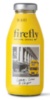
The Retail Times reported that Firefly Natural Drinks has teamed up with Selfridges to launch a limited edition lemon, lime & ginger drink in a collectable yellow bottle. The drink will be available in all Selfridges stores to celebrate the Queen's Diamond Jubilee and the Olympics.

Lance Seeto is an Australian chef who works at the Castaway Island restaurant in Fiji and who also writes a weekly column for The Fiji Times. His column last week described how he was struggling to shake off cold symptoms brought on by the start of winter. Naturally, he was advocating the use of ginger as one of the remedies to strengthen the immune system. I've never really thought about winter in Fiji. According to Wikipedia, the average winter temperature in Fiji is a chilly 22C (72F). Where I live in the UK the average summer temperature seems to be a positively balmy 22C. It's all relative, I suppose.

According to The Daily Telegraph, Ted Baker, the British-owned international fashion chain, celebrated the Queen's Diamond Jubilee week by giving out free ginger beer in its shops.

The Americans love their malt & hop beers with added ginger. The Utica Observer-Dispatch reports that the local FX Matt Brewing Company has launched a limited-edition Saranac Lemon Ginger in the style of a Belgian Saison. A Saison is a pale ale brewed for harvesting farm workers in Wallonia, and, by definition, is also for a limited period.

Still in the US and the Minneapolis St.Paul Business Journal introduced us to a new brewery and taproom called 612Brew. The brewery will launch with two regular beers and a summer seasonal beer (the one of interest to me) by the name of "Mary Ann". Mary Ann, named after a character from the 1960s TV series Gilligan's Island, is a German-style lager with added freshly grated ginger. Ginger is also a character from Gilligan's Island.

I'm always pleased when a restaurant uses ginger prominently in its signature dish. These dishes help to spread the word about ginger far beyond places where it is grown. The latest signature dish which I have discovered (on the Internet, that is, not in person) is Chocolate & Ginger Venison, from the Hildebrand Ristorante in Cape Town. A number of South African websites describe it as a fusion of Italian flavours and African flair.

Unfortunately, there was a ginger product recall last week. The Canadian Food Inspection Agency reported that Scholtens Inc has recalled Granny Appleton Crystallized Ginger in 125g packs owing to the presence of sulphites. The recall applies to packs sold in Ontario. I'm not sure whether sulphites are supposed to be in this product or that the level is too high.

In recent years, manufacturers have become more aware of the problems which sulphite ingestion can cause, particularly for those with respiratory disorders. Four years ago Queensland's Buderim Ginger started a two-year project to determine whether chlorine dioxide could replace sulphites as the preservative of choice. I've never read about the project's outcome but here is an interesting, and recent, report from the Queensland government on the same topic.

A smile must be returning to the face of many a ginger farmer in southern India. And the reason why? The price of ginger has actually started to rise. With most Indian ginger harvested during May and imported ginger not set to arrive yet, there is now a shortage in markets countrywide. This shortage has naturally translated into a rise in price. One farmer was so surprised by the increase that he decided to sell his crop which had been set aside for next season's seed. But some Indian farmers have missed out on the near three-fold increase in recent weeks. Farmers from Kerala leased land in the neighbouring state of Karnataka. As the leases expired by the end of May, these farmers had to harvest and sell their crops before the price started to rise. It is feared that the price will fall in the near future as cheaper imports from China reach the markets. (Sources: The Hindu, mathrubhumi, Deccan Herald)

Still in India and a story in The Telegraph about a ginger farmer in the state of Assam. An important source of income for him is the export of his ginger to Bangladesh. The best financial return is gained by exporting dry ginger as the drying process retains the quality and increases the shelf life. Unfortunately for him, there are no drying facilities in the region which means that he can only export ginger flakes. These flakes, which I imagine are painstakingly air-dried, have a more limited use and, consequently, a lower value.

Queensland's Sunshine Coast Daily has reported on a leaking dam and the potentially damaging consequences for ginger farmers who rely on the water supply. It hasn't been a problem so far as recent rain has replaced the leaking water but this can't continue once the weather changes.

Sunday, 20 May 2012

Jack Benny, Bunting, Spices Parks & Ginger Witbier

The Los Angeles Daily News reported on an unusual anniversary two weeks ago. It was on May 2nd, 1932 that Jack Benny took to the airwaves with his first radio programme. In those days, and for quite a while afterwards, radio programmes were sponsored and actually took the name of the sponsor. In Jack Benny's case, his show was called "The Canada Dry Ginger Ale Program". It was broadcast twice a week for five months until Canada Dry stopped the show for what The Digital Deli referred to as Benny's 'persistent needling of his sponsor'. You may think that this was a case of don't bite the hand that feeds you. But, as we now know, Jack Benny went on to bigger and better things.

Here in the UK, the Queen's Diamond Jubilee is nearly upon us. If you want to participate and you're finding it difficult to purchase your bunting, you are in luck. Crabbie's Alcoholic Ginger Beer has very kindly created some downloadable bunting in PDF format. As George and Camilla might say, what a tickety boo idea.

Two neighbouring states in the north east of India could see the creation of spices parks, according to The Economic Times. The Indian government's Union Ministry of Commerce and Industry is keen to develop these parks in Meghalaya and Assam as centres where farmers can deliver their crops, such as ginger and turmeric, and have them graded, processed and packeged for export. It is hoped that by cutting out the middleman, farmers will receive a better price.

Later this month the New York Historical Society will open a fascinating exhibition called Beer Here: Brewing New York's History which will run until early September. A stalwart of the New York brewing scene, according to the society's website, is the Matt Brewing Company which has been around for 150 years. During the prohibition era, the company produced a range of soft drinks, including the popular Utica Club Ginger Ale, in order to stay in existence. What took my eye was a reference to another soft drink, a non-alcoholic malt tonic, which contained the following advice on the bottle label, “Caution: Do not ferment, do not add yeast, or you will create beer”.

If you live in Hawaii you may be interested in a very important project being undertaken by the Kohala Watershed Partnership (KWP). The role of the KWP is to maintain the 50,000 acres of Kohala tropical rain forest. Unfortunately the forest has been infested with one of the world's most invasive weeds, Kahili Ginger. This plant is native to the Himalayan region of India but has now taken root in countries as far apart as Jamaica and Australia. Its spread has been inadvertently caused by its popularity as an ornamental garden plant. The project aims to raise enough money to fund a specialist team of 'ginger ninjas' who will concentrate on the total eradication of this plant before it is too late. I'm sure the authorities in Queensland, where the plant has been officially designated as a weed and therefore a risk to biosecurity, will be interested in the progress of this project.

I've been reading about ginger produced in the Philippines and its export to Japan, Germany, Hong Kong and the UK. I only ever see Chinese ginger in the produce section of my local supermarkets so I have no idea when I have consumed Filipino ginger. Local farmers grow a mixture of lower yielding but more disease resistant native varieties and higher yielding but less disesase resistant foreign varieties such as Hawaiian and Jamaican. Apparently, if you slice open a piece of ginger and its colour is yellowish-brown with pinkish lines, you have a Hawaiian variety. And if you encounter a small, red and very pungent rhizome, it's a Red Native.

NTD Television carried the news from Chinese state-owned media reports that farmers in Qingzhou City, Shandong Province, have been preserving their ginger and cabbage in a cocktail of harmful chemicals. Farmers have been harvesting these crops, applying pesticides and an insecticide called dichlorvos (sold under trade names such as DDVP and Vapona), and also applying a poisonous chemical known as 'six-six powder' or 'sixty-six powder'. The crops are then stored until the price rises. According to the state-owned media reports, farmers have been using 20 bottles of DDVP and 150kg of 'six-six powder' for every 25,000kg of ginger.

The Deccan Herald has reported again on the continuing plight of ginger farmers in the Malnad region of the Indian state of Karnataka. The farmers switched to ginger last year following the failure of their non-ginger crops. But even though they have avoided disease this season, they haven't been able to do anything about the fall in the price of ginger. They will be lucky to recoup their investment.

A former athlete celebrated his 80th birthday whilst descending from a solo 17,000ft climb in the Annapurna mountain range in Nepal. According to the Croydon Guardian, he celebrated at the top with a ginger tea.

North Carolina's Highland Brewing Company launched a ginger Belgian-style witbier this month which will be available until August. No sooner had it been released than Esquire magazine named it as one of the Best Beers of 2012, according to Mountain Xpress. This must really be worth trying.

Sunday, 15 April 2012

The Hairy Bikers, No Ginger Beer, Assam Ginger & American Kombucha

I've been watching The Hairy Bikers' Bakeation series on BBC2 each Tuesday. If you are not familiar with this wonderful programme, Simon King and Dave Myers are spending four months riding 5000 miles on their motorbikes across Europe introducing us to the best of traditional baking, both savoury and sweet. I knew that I was going to enjoy last week's episode in particular as the bikers were scheduled to stop off in Austria, my favourite country and one I love to visit. I wasn't disappointed. One place they stopped was the village of Seckau in the state of Styria. Here, they introduced us to Cafe Konditorei Regner, a family bakery since 1660, and their speciality gingerbread (or 'lebkuchen'). The gingerbread recipe was developed by the current owner and it was demonstrated on the programme by his son, Gregor, who, incidentally, won a gold medal at the International Baking Competition in Calgary, Canada, in 2009. You can see the Gregor Regner part of the programme on YouTube.

There was a most unusual story in Bermuda's The Royal Gazette last week. One of the country's leading soft drinks manufacturers, John Barritt & Son, famous for its Bermuda Stone Ginger Beer, actually ran out of the ginger beer for the best part of a month according to other sources. How did this happen? Barritt's ginger beer is made in Florida from a Jamaican and African ginger concentrate produced in Milton Keynes in the UK. The concentrate is shipped to the US as one of many goods in a container. A recent shipment was delayed by US Customs when a container was impounded whilst other goods were investigated by officials. Up until the end of 2010 the ginger beer was bottled in Bermuda which I assume means that the concentrate was shipped direct.

Green Bee Soda is beverage company from Maine, USA, with a unique selling proposition of making a range of sodas based on wildflower honey. The company made an announcement last week about the launch of a new flavour called Ginger Buzz. This drink contains freshly chopped ginger, coriander and the essential wildflower honey. Let me know what it's like if you are able to try it.

Organic farming is set to be the future according to the Assam state government in India. The Indian Express reported that the state goverment will allocate funding to encourage young people to take up farming and discourage existing farmers from using using chemicals. The range of eligible crops includes ginger and turmeric. The article also stated that Assam is one of India's major producers of ginger. I have read elsewhere that the state produces more than 70 percent of the country's ginger, some of it already organic. Interestingly, nearly 25 percent of Assam's farmland is already organic by virtue of the fact that there has been a shortage of chemical fertilisers.

Karbi Anglong is the largest of the 27 administrative districts in Assam. Four years ago, district officials applied to have Geographical Indication status for locally grown ginger. I don't know whether the status was ever granted but if it was then it confers an element of protection and exclusivity to what many people describe as a distinctive ginger. GIN-FED, the Ginger Growers Co-Operative Marketing Federation in Karbi Anglong, describes the local produce as the world's finest organic ginger. Traditionally, many of the ginger farmers in the district are women.

The Singhasan Hills in Karbi Anglong are said to produce the finest ginger in all India. But this area was the scene nearly ten years ago of an outbreak of violence between the Kuki and Karbi tribal communities over the Kuki production of ginger in the hills.

Last month I reported the story from The Gympie Times regarding the imminent sale of a family dairy farm and the switch to ginger farming. Well, according to The Gympie Times last week, the sell-off was completed successfully. But the latest story mentioned a detail of which I wasn't aware previously. The family already grow ginger on 10 acres of land and produce certified ginger 'seed' for Buderim Ginger.

So, whilst an Australian farmer is hoping to make a living from ginger seed, producers of ginger seed in one particular district of the Indian state of Karnataka are witnessing a dramatic fall in price. The Deccan Herald has reported that with fewer farmers wishing to grow ginger, the price of seed has plummeted from Rs 1,700 per bag to Rs 280. In fact, seed farmers may not even cover the cost of fertilisers and pesticides. It appears that it will be cheaper for the farmers to leave the ginger in the ground.

My understanding of the Indian ginger industry is that ginger is grown in areas which are isolated from and independent of each other. For example, the plight of a small part of the local ginger industry in Karnataka may be completely different to the state of the local ginger industry in Assam or Kerala. Difficulties in one area are not necessarily reflected elsewhere. There are too many factors involved such as variety, terroir, climate and export potential to name but a few.

The Maine Sunday Telegram carried a story about a relatively new start-up business in Portland, Maine. Urban Farm Fermentory (UFF) has introduced a range of alcoholic beverages called Urban Farm Fermentory Kombucha Culture which includes a ginger flavour. Kombucha is made from fermented green and black tea, and sugar. Interestingly, UFF is hoping to use local farmers to grow ginger in hothouses. These new drinks contain less than one percent alcohol.

Sunday, 18 March 2012

New Season, Squatters Harvest & Ginger Discoveries

Following the recent initiative by the Jamaican government to give a boost to the agriculture sector in general and the ginger sector in particular, the Jamaica Information Service has reported that an integral part of the initiative will be for farmers to register for a praedial larceny programme. My first question after reading the report was 'what is praedial larceny?'. Praedial larceny is the theft of agricultural produce or livestock from a farm. To combat this type of crime the police will join forces with the ministry, judiciary and farmers.

Bangladeshi farmers are only a week away from planting a newish variety of ginger. BARI Ada-1 (developed by the Bangladesh Agricultural Research Institute) is due to be planted from the last week of March to the last week of April. This variety is said to be suitable for cultivation anywhere within the country which must be a big selling point. When I read through the specification sheet for this particular variety, I was surprised to see that one of the recommended sources of fertiliser is cow dung. It's nice to see that something natural is being used.

The Gympie Times in Australia carried a story about a topic which we've heard before and I'm sure we will hear again. A dairy farmer from Kia Ora (a small town near Gympie) has decided to sell his cattle because he cannot command a satisfactory price from the supermarkets. He said that he is being paid less from the supermarkets than the cost of production. This is becoming a regular occurrence here in the UK as well. But whereas some farmers in this situation sell up and seek alternative employment, this particular farmer is switching to ginger cultivation. He is in an ideal location in the ginger-growing heartland of South East Queensland and is only 41 miles from Buderim, Australia's largest ginger processing company. I wish him well.

Last November I wrote about a Fijian government scheme to give squatters the opportunity to become ginger farmers. Well, The Jet has reported that a community of 25 ex-squatters in Lomaivuna has started harvesting its first ginger crop with an estimated value of over $30,000. One acre of the harvest will be used for next season's 'seed' stock. The Fijian Local Government minister is now calling for more squatters to join the scheme.

VietnamNet Bridge reported that a team of Vietnamese and international scientists have discovered two new ginger genera in central Vietnam. The plants have been named Newmania serpens N. S. Lý & Skornick and Newmania orthostachys N. S. Lý & Skornick. My feeling is that they are ornamental rather than edible. According to the Smithsonian's National Museum of Natural History (NMNH) the discovery of a new plant genus is unusual whereas the discovery of a new plant species is far more common. The NMNH reported ten years ago about the discovery of a new ginger genus, Smithatris supraneeana, in Thailand.

Back to Jamaica again and a speech given by Roger Clark, the agriculture minister. The government is putting a lot of effort into restoring the Jamaican ginger industry to its former glory and with ginger among the fastest growing spices in international trade, now is the time to do it. Clark said that over the last ten years global ginger imports have increased from 276,000 tonnes to 423,000 tonnes with Jamaica's contribution estimated to be less than four percent. Although domestic production is now increasing, the country is only able to supply 10% of its direct international orders. Jamaican ginger is being grown specifically for niche markets where its high quality can command a premium. The national short-term production target of 21,000 tonnes will require 3,000 acres at an improved target yield of 7 tonnes per acre. One target set for this year is the production of 589 tonnes of disease-free 'seed' stock for open-field cultivation next year. Another target is to allocate 10 acres of covered cultivation which, I imagine, is to protect against the vagaries of the weather.

The Deccan Herald had an interesting feature on how ginger cultivation has changed land-use patterns in the Indian state of Karnataka. Local farmers in the Banavasi region, known in the past for its deep-water paddy fields, switched to ginger after discovering the vast profits to be made when ginger farmers from the neighbouring state of Kerala started renting farmland. Ginger cultivation is very capital intensive as it requires considerable quantities of fertilisers and pesticides to achieve high yields. In this region land had to be drained which must have been expensive.

Sunday, 11 March 2012

Making Ginger Beer, Memory Aid, Anti-Ageing & Seed Stock

It's very rare to find in the press details of the production process of a commercial ginger beer. So I was pleased to read a surprisingly detailed account in the Democrat and Chronicle of how the Ithaca Beer Company in New York State makes its non-alcoholic ginger beer. It was interesting to discover that the beer is made in small batches of about 775 gallons with each batch containing 40 pounds of fresh ginger root. The addition of pure cane sugar and lemon juice (widely accepted as essential ingredients) finishes off a ginger beer which only takes 45-60 minutes to produce.

Spotted this unusual cocktail last week - Shaky Pete's Ginger Brew. This drink can be found in Hawksmoor restaurants in London and is made from gin, homemade ginger syrup, lemon juice and London Pride, a premium ale from the Fuller's brewery.

I was reading a research paper from Thailand which has shown that ginger is a potential cognitive enhancer for healthy, middle-aged women. It appears that the research was prompted by the development of cognitive enhancers from plants possessing antioxidant properties. Although researchers at Khon Kaen University showed the benefit of ginger on the participants, I'm not convinced about why middle-aged women were identified as needing assistance. Apparently, "middle-aged women performed poorly in various areas of cognitive function including attention, calculation and immediate recall (assessed using Minimental state examination (MMSE))". I also found a similar research paper by the same team entitled 'Ginger Supplementation Enhances Working Memory of the Post-Menopause Women'.

Arabian folklore holds that ginger can improve memory. I really must remember to eat and drink more ginger.

Isthmus had a passing reference last week to an interesting beer planned for release next month. Vintage Brewing Company of Madison, Wisconsin, will be producing a spiced, strong golden ale called Jinja Ninja. According to the article it is sure to have spicy ginger qualities. The name of the beer sounded familiar and then I remembered. Jinja Ninja is also an award-winning English bottled beer from the Peerless Brewing Company which is brewed with root ginger, chillies and lemons. It is also an alcoholic boutique ginger beer from Sydney.

The Times of India carried an article on how to fight the health problems brought on by the change from winter to summer (whatever happened to spring?). Apparently there is an increase in colds and coughs caused by the extremes of day and night temperatures, viral infections and allergens. The article stated that consumption of ginger and garlic should be increased to build a strong immune system. I can manage that.

The Times of India has also published its list of the top six anti-ageing foods and it includes ginger. Actually, it includes the dynamic duo again - ginger and garlic. The article says that ginger helps to rejuvenate cells and prevent damage.

A Nigerian business consultancy blog informed me that about 92 percent of Nigerian ginger production is actually exported. It also told me that Kaduna, Nasarawa, Benue, Niger and Gombe are Nigeria's ginger-growing states. And if I've read the blog correctly, it seems that the UK is the biggest importer of Nigerian (?) ginger in the EU, closely followed by the Netherlands and a long way ahead of Germany and France.

Last November I wrote about the sad cases of suicide amongst ginger farmers in the Indian state of Kerala. I thought that we had seen the end of this but last week The Hindu reported two new cases. One farmer in Wayanad was unable to repy his loans after wild animals destroyed his crops. The other farmer is said to have found it difficult to repay his debt following a sharp fall in the price of ginger. Let's hope that this is not the start of another spate.

In my last post I wrote about the Jamaican government's plan to match non-cash public assets with private companies finance. The Gleaner has now reported that two Jamaican companies, Salada Foods and P.A. Benjamin Manufacturing, have partnered with the agriculture ministry in a project to provide ginger and turmeric 'seed' stock. The project will be based at the government's Orange River Research Station. The seed stock will be grown under cover for eventual open field cultivation. For both companies, using Jamaican ginger will be a unique selling point.

The King’s Ginger, a ginger liqueur from Berry Bros & Rudd, is now available in Australia from this month. Australians will now be able to enjoy a drink which I first tasted and praised over a year ago.

The Hindu Business Line reported that shipments of Indian ginger have exceeded the government’s target for the first nine months of the current fiscal year. The target for the period was 10,000 tonnes but the country actually shipped 12,150 tonnes. Although the current price is double that of a year earlier, it is still $500 a tonne below the international price.

The same article also mentioned that cultivation of the internationally-renowned Cochin ginger is being reduced because of a drop in the price. This is surprising as Cochin ginger normally commands a premium which reflects its status. Its high quality and fibreless content makes it ideal for drying. I believe that there will always be a market for Cochin ginger so if the remaining farmers can stick with it, basic economics will dictate that the price and premium will eventually rise again.

Referring to the same information-packed article again, Kerala is home to a high oil content ginger commonly known as 'Ellakalan'. But because the extraction units in the state have now switched to cheaper low oil content varieties from Nigeria and Ethiopia, cultivation of Ellakalan has gradually disappeared.

The Financial Express reported that Indian ginger prices are likely to come under further pressure from cheaper Nigerian and Ethiopian imports. It also said that domestic prices will remain low because of record production, particularly in the south of the country. Traders believe that ginger consumption in the north will decline as the weather becomes hotter. Strange considering that in the West a chilled ginger drink is regarded as an ideal refreshment during the summer. Perhaps an enterprising ginger farmer in Kerala or Karnataka could produce a range of ginger-based soft drinks such as ginger and lime, and ginger and pineapple.

Sunday, 18 December 2011

Ginger Xmas Hit, Winter Beer Festival, Ginger Wine & Increased Earnings

I was extremely pleased to read in the Daily Mail last week that ginger is the big success story in the UK's food and drink sectors this Christmas. The Mail quoted a recent statistic that exports of root ginger from India, the source of the cheapest good quality ginger, have gone up by 76pc year on year. I think that the implication was that UK ginger food and drink products use Indian ginger rather than, say, Chinese ginger which has a strong presence in the UK. My feeling is that Chinese ginger is popular in its raw form for domestic consumption but Indian ginger is preferred for manufactured products.

It's only a month until the 2012 National Winter Ales Festival at the Sheridan Suite in Manchester. The festival, according to CAMRA, will feature over 300 real ales, foreign beers, ciders and perries. The British draft beers category should contain a number of beers with ginger. The 1648 Brewing Co from near Lewes in East Sussex will supply Ginger No.1, a blend of smoked malt and root ginger. The Beartown Brewery from Congleton in Cheshire will supply a blonde ale called Ginger Bear. The Marble brewery from Manchester will be supplying a beer that I know absolutely nothing about. Finally, Robinsons from Stockport will present its famous Ginger Tom, a speciality strong ale brewed with Chinese bruised ginger root.

I discovered on the 1648 website that the Ginger No.1 beer was originally called Ginger Nol. But why Ginger Nol? (I often ask that about many beer names). Well, Oliver Cromwell had red hair and his nickname was "Old Nol". Nol is an old word meaning lump or stump which can be loosely translated as head. Hence we have Ginger Nol! The brewery had to change the name as people insisted on calling it Ginger No.1.

The Times of India reported on Christmas in Nagpur, the largest city in central India and the third largest city in the state of Maharashtra. It mentioned that as winters are cold, ginger wine is very popular because "it creates heat in the body and soothes the throat". The average low temperature for the city is 12C (54F) which, to me, doesn't seem that low but when you have a peak average high of 42C (108F), I would probably find 12C a touch chilly. I also learned that although Mumbai is the state capital, Nagpur is the winter and auxiliary capital. I can't find out why the state needs a winter capital; does anyone know?

JustLuxe, an online affluent lifestyle guide, featured Elixir G, the world's only liquid ginger mix. The Los Angeles-based drink can be used in cocktails, salads and desserts. I was drawn to the article by the paragraph describing the selection and production process. The best ginger root in the world, according to the drink's creator Bill Tocantins, is sourced from a number of countries including Thailand, Brazil and India. Ginger root extract is combined with lemon juice and pure cane sugar to produce a natural drink with no preservatives, chemicals or dyes. I've no idea how you get hold of it.

There has been a surprise development in the sad story of the ginger farmer suicides in the state of Kerala in India. IBNLive has reported that farmers from Wayanad, the epicentre of the crisis, are leasing land in the neighbouring state of Karnataka for next September in the hope that the price of ginger will rise. Another IBNLive report stated that a report on the ginger farmer migration will be submitted to the Keralan state government. An IPS story on the same subject has said that the agrarian crisis is severe. A researcher in agrarian distress told IPS that there "was a huge gap between income earned from agriculture and the input costs incurred by farmers".

After reading about the crisis caused by the drop in the price of ginger, it was strange to read about the big increase in earnings from Indian ginger exports in the first seven months of this fiscal year. Earnings more than doubled from Rs 43.47 crore (434,700,000) to Rs 105.42 crore (1,054,200,000).

And finally, what are ginger infused hot towels? I've noticed that a number of health clubs, spas and beauty salons offer this ginger steam towel treatment but, to be honest, I've no idea what it does apart from opening and cleansing the pores. Let me know if you have had this treatment or recommend it. What does the ginger do?