Showing posts with label Sunshine Coast. Show all posts

Sunday, 17 June 2012

Silver Sofi™, Crabbie's Sauces, Ginger Lager & Rising Prices

I'll start this week by congratulating those ginger products which are the National Association for the Speciality Food Trade's 2012 sofi™ Silver Finalists. This year's runners-up, to be honoured tomorrow in Washington D.C, are Japanese Ginger Chocolate Bar from Romanicos Chocolate, Ginger Peach Black Tea from The Republic of Tea, Ginger Soother from The Ginger People and The Latest Scoop Ginger Pear Sorbet from Cable Car Delights. You can see the other silver finalists here. Hopefully I will have a list of gold award winners next week.

Crabbie's was in the news again last week. This time, according to The Drum, it has launched two ginger flavoured sauces, Ginger Spiced Sweet Chilli Sauce and Sweet Ginger Splash, in the Asda supermarket chain. The sauces have been created in partnership with the increasingly popular sauce company, Trees Can't Dance.

Halewood International, producer of the Crabbie's range, plans to double in size, says the Liverpool Daily Post. It will be interesting to see how Crabbie's con>tributes to this growth.
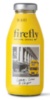
The Retail Times reported that Firefly Natural Drinks has teamed up with Selfridges to launch a limited edition lemon, lime & ginger drink in a collectable yellow bottle. The drink will be available in all Selfridges stores to celebrate the Queen's Diamond Jubilee and the Olympics.

Lance Seeto is an Australian chef who works at the Castaway Island restaurant in Fiji and who also writes a weekly column for The Fiji Times. His column last week described how he was struggling to shake off cold symptoms brought on by the start of winter. Naturally, he was advocating the use of ginger as one of the remedies to strengthen the immune system. I've never really thought about winter in Fiji. According to Wikipedia, the average winter temperature in Fiji is a chilly 22C (72F). Where I live in the UK the average summer temperature seems to be a positively balmy 22C. It's all relative, I suppose.

According to The Daily Telegraph, Ted Baker, the British-owned international fashion chain, celebrated the Queen's Diamond Jubilee week by giving out free ginger beer in its shops.

The Americans love their malt & hop beers with added ginger. The Utica Observer-Dispatch reports that the local FX Matt Brewing Company has launched a limited-edition Saranac Lemon Ginger in the style of a Belgian Saison. A Saison is a pale ale brewed for harvesting farm workers in Wallonia, and, by definition, is also for a limited period.

Still in the US and the Minneapolis St.Paul Business Journal introduced us to a new brewery and taproom called 612Brew. The brewery will launch with two regular beers and a summer seasonal beer (the one of interest to me) by the name of "Mary Ann". Mary Ann, named after a character from the 1960s TV series Gilligan's Island, is a German-style lager with added freshly grated ginger. Ginger is also a character from Gilligan's Island.

I'm always pleased when a restaurant uses ginger prominently in its signature dish. These dishes help to spread the word about ginger far beyond places where it is grown. The latest signature dish which I have discovered (on the Internet, that is, not in person) is Chocolate & Ginger Venison, from the Hildebrand Ristorante in Cape Town. A number of South African websites describe it as a fusion of Italian flavours and African flair.

Unfortunately, there was a ginger product recall last week. The Canadian Food Inspection Agency reported that Scholtens Inc has recalled Granny Appleton Crystallized Ginger in 125g packs owing to the presence of sulphites. The recall applies to packs sold in Ontario. I'm not sure whether sulphites are supposed to be in this product or that the level is too high.

In recent years, manufacturers have become more aware of the problems which sulphite ingestion can cause, particularly for those with respiratory disorders. Four years ago Queensland's Buderim Ginger started a two-year project to determine whether chlorine dioxide could replace sulphites as the preservative of choice. I've never read about the project's outcome but here is an interesting, and recent, report from the Queensland government on the same topic.

A smile must be returning to the face of many a ginger farmer in southern India. And the reason why? The price of ginger has actually started to rise. With most Indian ginger harvested during May and imported ginger not set to arrive yet, there is now a shortage in markets countrywide. This shortage has naturally translated into a rise in price. One farmer was so surprised by the increase that he decided to sell his crop which had been set aside for next season's seed. But some Indian farmers have missed out on the near three-fold increase in recent weeks. Farmers from Kerala leased land in the neighbouring state of Karnataka. As the leases expired by the end of May, these farmers had to harvest and sell their crops before the price started to rise. It is feared that the price will fall in the near future as cheaper imports from China reach the markets. (Sources: The Hindu, mathrubhumi, Deccan Herald)

Still in India and a story in The Telegraph about a ginger farmer in the state of Assam. An important source of income for him is the export of his ginger to Bangladesh. The best financial return is gained by exporting dry ginger as the drying process retains the quality and increases the shelf life. Unfortunately for him, there are no drying facilities in the region which means that he can only export ginger flakes. These flakes, which I imagine are painstakingly air-dried, have a more limited use and, consequently, a lower value.

Queensland's Sunshine Coast Daily has reported on a leaking dam and the potentially damaging consequences for ginger farmers who rely on the water supply. It hasn't been a problem so far as recent rain has replaced the leaking water but this can't continue once the weather changes.

Sunday, 30 October 2011

Worried Ginger Farmers, Fijian Investment, Ginger Coffee Launch And Big Hairy Moustache

ABC Wide Bay, the Australian TV and radio station which covers part of Queensland's ginger growing region, had an interesting report on the problems facing farmers as they embark on a new ginger season. Since last year ginger crops in both the Wide Bay and Sunshine Coast areas suffered badly from the fungal rot pythium. Both areas typically produce 80pc of Australia's ginger annual output but last year some growers lost up to 70pc of their crops. These farmers have now planted this year's ginger 'seed' with trepidation and those farmers not affected last year are understandably concerned. I wish the farmers well for the coming months and I'll let you know of their progress.

Still on the subject of Australian ginger, here is an interview from ABC Brisbane with Ron O’Grady, CEO of Buderim Ginger.

I've reported occasionally in the past about the progress being made by the Fijian ginger industry to establish itself on the world stage. The Fiji Times has now told us of a $1 million three-year investment programme launched by the Fijian government to revitalise the ginger industry. It is hoped that the investment will improve the country's export earnings from the current $6.3 million to $9 million a year. Basically, the plan is to develop ginger 'seed' with increased vigour which can be grown throughout the country rather than selected areas as at present. Fiji currently produces more than 2000 tonnes of ginger a year of which nearly 50pc is exported, principally to Australia and Hawaii.

Various African websites reported last week about Nestlé Nigeria's launch of its Nescafé Ginger & Lemon coffee. I've noticed that ginger coffee is very popular in many parts of Africa (and the Middle East as well) but, as I've said before, I don't know why it isn't marketed in Europe and beyond. Back to Nestlé Nigeria and the news that this product is being introduced into the health market because of the "beneficial health properties of ginger and lemon". It's questionable whether a statement like that would be allowed in many countries.

Last week a number of websites, including The Drum, reported the launch of a £2 million advertising campaign for Ginger Joe, the alcoholic ginger beer. Depending on which site you read, I'm not certain whether this launch is the start of the £2 million or whether it is the next stage within an existing £2 million. Whichever it is, it's a lot of money. The centrepiece of the campaign will be Ginger Joe's signature ginger moustache, a brand mark fast becoming readily associated with the product. The moustache features quite prominantly, 78 feet's worth of prominence actually, on a billboard unveiled earlier this month in Shoreditch in London. The giant hairy moustache is overlaid with the message "Thanks for donating to our big hairy poster".

By the time you read this you may well have heard about the new flavour to be added to the range of Crabbie's Alcoholic Ginger Beers. Apparently we will only have to wait until the end of October to find out. The phenomenal onslaught of Crabbie's and the rapid emergence of Ginger Joe is shaping up to be an interesting battle. Although the producers may argue that they are aiming at different markets and demographics, I can't help but think of The Beatles and The Rolling Stones, and Blur and Oasis.

Sunday, 29 May 2011

Australian Ginger Future, Squatters, Increasing Production and Antimicrobial Properties

The Fijian government is taking a novel approach to the problem of squatters. The Jet community newspaper has reported that twenty one families with farming backgrounds have been selected to take part in a pilot programme. The government has set aside 30 acres between the families and will provide each with a home. The families will also be provided with seeds for crops such as ginger, given the appropriate training and encouraged to sell the resulting harvest at local markets. I wish the scheme well.

Last week I read how two neighbouring regions are experiencing diametrically opposite views about the ginger industry. First, the Sunshine Coast Daily reported that farmers in the coastal region are seriously considering giving up growing ginger following the second successive poor harvest caused by the dreaded pythium rot disease. And then, on the same day, The Gympie Times reported that the Gympie region, an area immediately to the north of the Sunshine Coast, is the ideal location for growing ginger. To emphasise the point, Gympie was chosen to host last week's inaugural conference of the Australian Ginger Industry Association.

Participants met at last week's Australian Ginger Industry Association conference to discuss a proposed five-year strategic plan to develop the industry. At the moment I don't have any more information about the conference but when I do I will let you know.

The Sri Lankan government is offering ginger farmers subsidised fertiliser in an effort to become self-sufficient in the crop. The country is in a similar situation to India in that it has a thriving export market coupled with increasing demand from the home market. This increase in domestic demand seems to be driven by the popularity of ayurvedic medicine which has forced the Department of Ayurveda to import ginger. This has a consequent effect on the country's balance of payments so it makes sense to increase production.

Browsing through the Journal of Venomous Animals and Toxins including Tropical Diseases the other day (I do like to vary my reading material occasionally) I found the results of a Brazilian study into the antimicrobial activities of certain essential oils and propolis. To be honest, I did rather regret varying my reading material so much that day. It was one of those documents that had me posing questions such as what does this mean, what does that mean, and have I already looked up the meaning of this word. Anyway, the conclusion of the report, I think, was that ginger essential oil with propolis (a resinous substance that honey bees collect from some plants) does have an observable effect on microorganisms such Staphylococcus aureus and Escherichia coli. If you would like to read the report of the study and let me know what it means, here is the link.